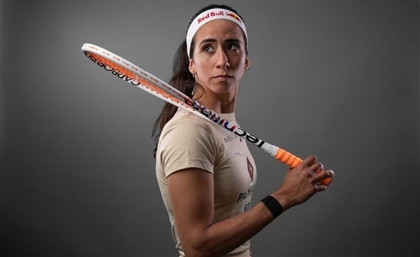

Nouran Gohar on Pregnancy, Postpartum, and Her Return to the Court
Nearly a year after her last match and four months after giving birth, former world No.1-turned-new-mother returns to competition at the Qatar Classic unseeded.
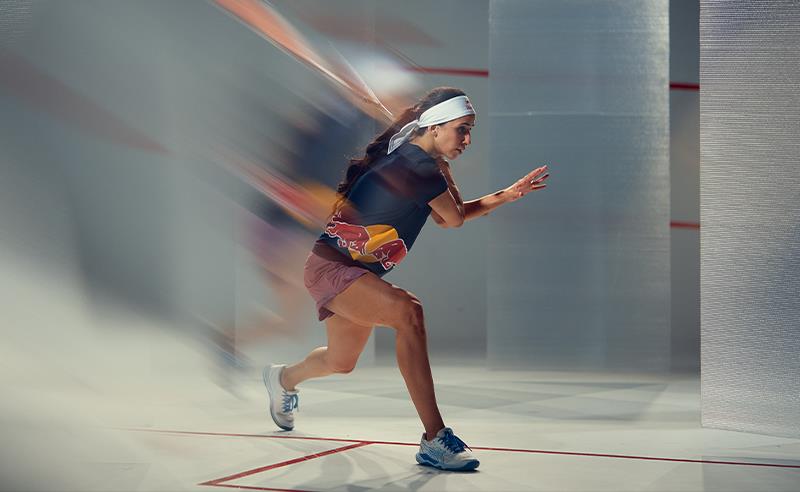
Egyptian squash icon Nouran Gohar hasn't played a competitive match in eleven months. When she returns at the QTerminals Qatar Classic on September 12th, she'll do it as a mother, four months postpartum, with no seeding to shield her from the tour's best in the very first round.
Gohar reached world No.1 in July 2020, at just 22. She won her first world title in 2024. By 2025, at 28, she was putting together one of the best seasons of her career.
"Although I had an amazing 2025, setting a career-best ranking and reaching almost every final, I didn't feel the same happiness," she says. "I felt I needed a change and something else in my life."
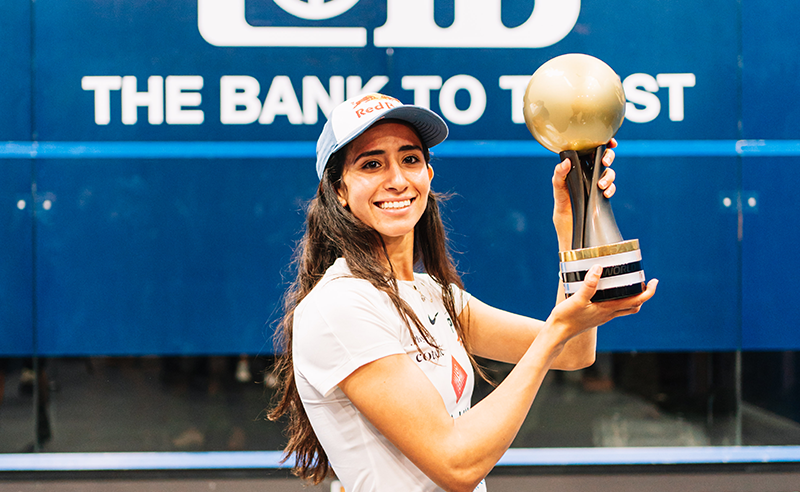 She played the CIB Egyptian Open that September without knowing she was already pregnant. "I was already two months pregnant at the Egyptian Open and didn't know it," she says. "I was vomiting every day, dealing with nausea, and struggling with smells and food, but I still made it to the semifinals without dropping a game." Weeks later, on September 25, 2025, she withdrew from the Qatar Classic and the US Open. She and her husband, fencer Ziad Elsissy, announced the pregnancy publicly on November 4th. "I'd always wanted to start a family, so I felt God was telling me it was the right time to take a break from squash and do that," she says.
She kept training through seven months of pregnancy, staying on court in limited sessions until roughly 25 weeks along, before complications forced a ten-day hospital stay in the final stretch - a stark contrast to the athlete who'd been grinding through summer training blocks less than a year earlier. Her daughter was born in April 2026. "I was able to train until my seventh month, but coming back to the court after pregnancy is something else," she says. "Physically, it's on another level."
That's part of why she isn't measuring this comeback against her old self. "The goal changed for me," she says. "It's not about getting back to my old game, or the old Nouran who was there before giving birth. It's about getting better every day, even if by just one percent." And it's why, even without a seeding, she chose the biggest stage available for her first tournament back rather than an easier one. "The plan was always to come back to the Qatar Classic," she says. "That was the level I wanted to come back at. If I wanted to see where I stood and compare myself to the level I want to be playing at, I needed to compete there from the start."
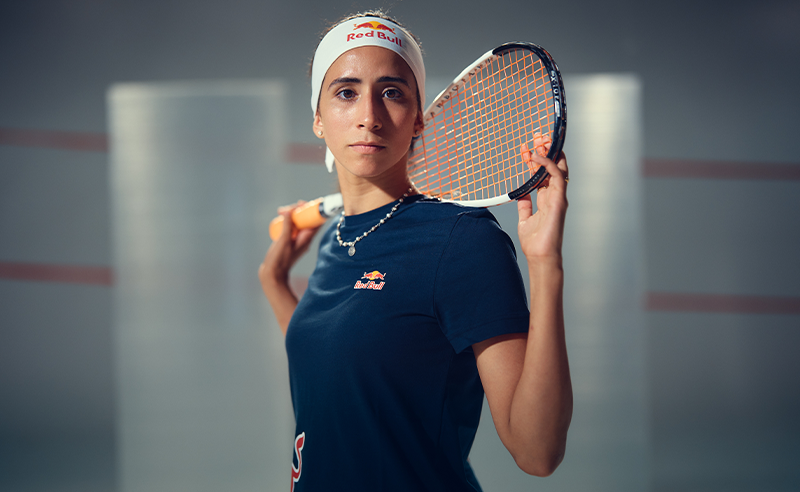
That level has moved on without her. Hania El Hammamy is now world No.1 and tops the Qatar Classic draw. Amina Orfi enters as the reigning 2026 World Champion. Nour El Sherbini - the same rival who beat Gohar in three straight World Championship finals before Gohar finally broke through in 2024 - remains an eight-time world champion in her own right. Gohar returns unseeded, which means she could meet any of them as early as the first round, with none of the protection a ranking would normally buy her.
"I've been keeping an eye on them from the very beginning," she says. "I knew when I found out I was pregnant that I was going to come back, so I had to keep watching the players I'd be competing against when I returned."
She isn't chasing outcomes yet, at least not out loud. "My first goal is to have really good matches under my belt and see myself improve every day," she says. It's a mindset she says predates motherhood entirely - the same conviction that carried her to No.1 in the first place. "When I'm playing my best squash, I'm pretty hard to beat."
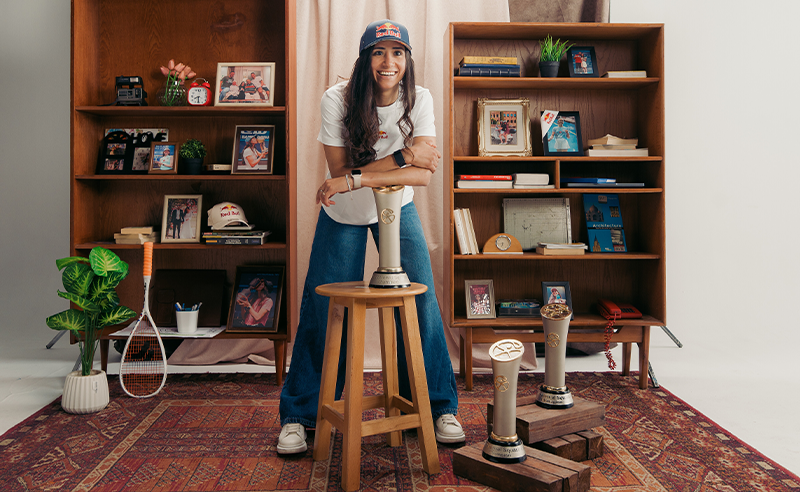 Further out, LA28 adds a layer of pressure unlike anything an earlier generation of Egyptian players faced. Egypt can send up to two women to the Games, and four Egyptians are realistically in contention for them: Gohar, El Hammamy, Orfi, and El Sherbini. The qualifying fight inside her own federation may be harder than anything she faces internationally. "Obviously, qualifying for the Olympics will be another challenge, especially on the Egyptian team, where so many of the world's best players come from Egypt," she says. Her answer is to solve the more immediate problem first. "For now, I want to get back to world No.1," she says. "Qualifying for the Olympics will be the next thing I have to worry about."
Whatever happens in Doha, the framing she's chosen for it is already settled. This isn't a comeback measured against who she used to be, or a race to reclaim old numbers on a ranking sheet. It's a continuation - one percent at a time, by her own account - of a career that was never really finished.
- Previous Article Amna Al Qubaisi Named Amongst TIME’s 100 Most Influential in Sports