

Analog Is the Egyptian Pilates Studio Built to Feel Like Home
Analog is a reformer Pilates studio built to feel as safe as a grandmother’s house, where walnut, amber light and vinyl set the mood and strength is something you keep, not something you show off.

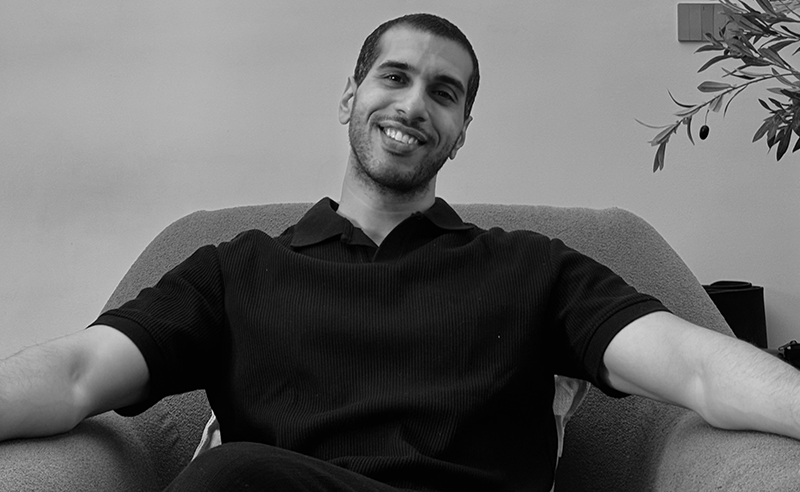
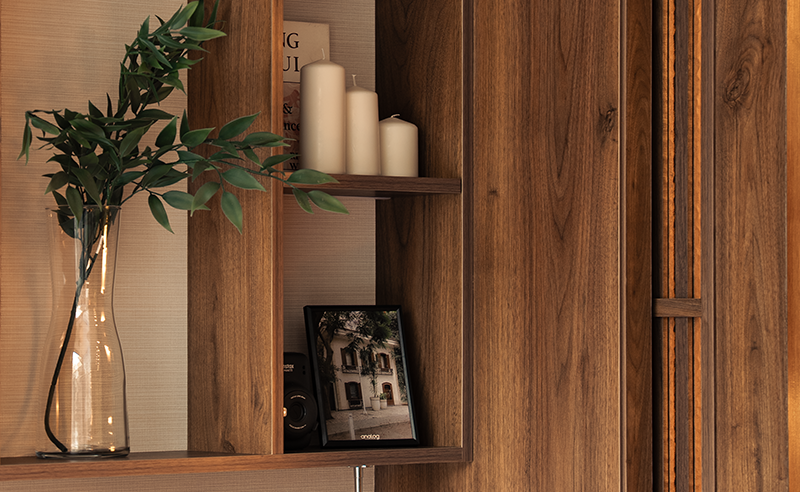
Mohamed Abbas has a simple test for whether a training space is working, and it has nothing to do with the equipment. It’s whether the person inside feels safe. Not calm, which a spa can manage, but safe, the way you feel in a grandmother’s house: the dark wood of the sideboard, a lamp left on in the hallway, framed photographs that have hung in the same place for decades. Nothing in a room like that is trying to impress you, and yet your shoulders drop the moment you’re through the door.
 That feeling is the brief behind Analog, the reformer Pilates studio Abbas co-founded with Omar Ahmed in Arkan, Sheikh Zayed. It is also why the place looks nothing like what most of us have come to expect from fitness. “We purposely moved away from the sterile, bright white aesthetic typical of most fitness spaces because we believe that a person’s environment dictates your mental state when you train,” says Abbas, who serves as co-founder and CEO. The studio is built on what he calls a nostalgic spatial identity, one that plays with raw textures, custom lighting and spatial zoning to make the room feel like a design gallery or a sanctuary rather than a traditional studio.
 The idea took shape on the road. Before a single reformer was installed, the team travelled through Paris, Italy and Switzerland, visiting studios to find out whether any of them offered a concept beyond white walls and performance. Mostly, they found the same room repeated, with the real differences lying in technique, and many places, they felt, leaned toward novelty over the fundamentals. Abbas is clear about where he stands on hot Pilates: he believes it offers nothing the original method doesn’t already. All that sweat, he points out, is water leaving the body rather than fat. What they carried home was a mood.
 Underneath that mood is a serious argument about the sport. The fitness industry, Abbas says, has a habit of turning movement into a 45-second performance, and Analog was built as a counterweight: a 55-minute class capped at ten people, taught with precision. “We’ve lost sight of the fact that Pilates is, at its core, strength training with an emphasis on control, precision, and deep biomechanics,” he says. “It is a sport in its own right, and more importantly, it can and should be the foundational conditioning for any other sport or physical pursuit.” It is why he wants men and athletes in the room alongside everyone else, and why he treats the reformer as an incredible piece of athletic equipment rather than a prop for a trend.
 Analog’s idea of success looks very different from the usual pitch. Crash cycles and quick fixes, Abbas argues, teach people to see their bodies as projects to be managed, and Analog is meant to flip that. “When you make Analog a consistent part of your life, the goal shifts from how you look on day thirty to how you feel, move, and perform decades from now,” he says. The work is joint health, deep core stability and movement mechanics that protect you as you age, and the payoff is harder to photograph than a six-week transformation. “Eventually, we hope someone leaves our studio feeling profoundly capable in their own skin,” he says. “Whether they are stepping onto a tennis court, lifting heavy at the gym, recovering from an injury, or simply navigating daily life, that physical confidence and body awareness is something that stays with you everywhere.”
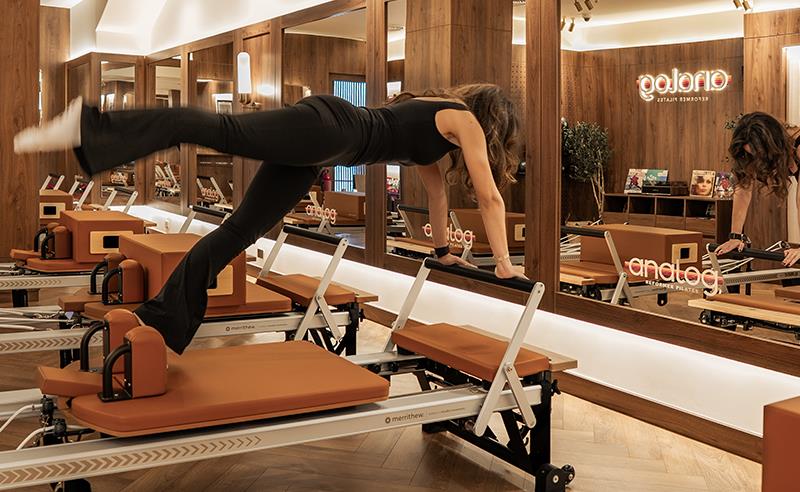
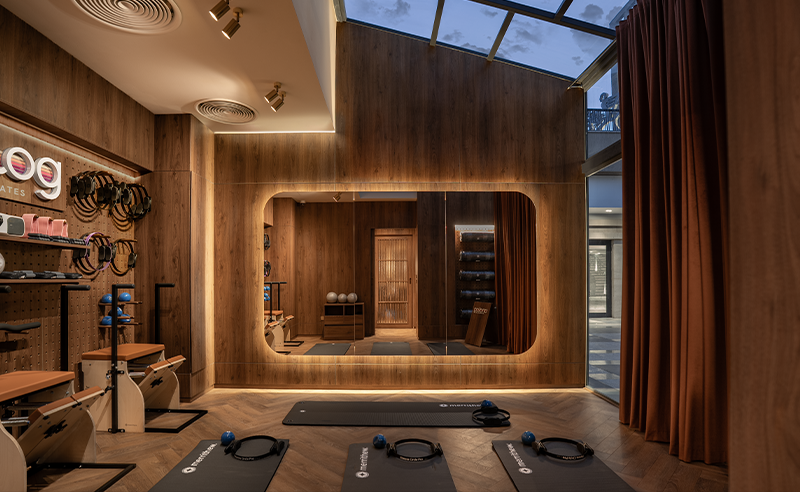
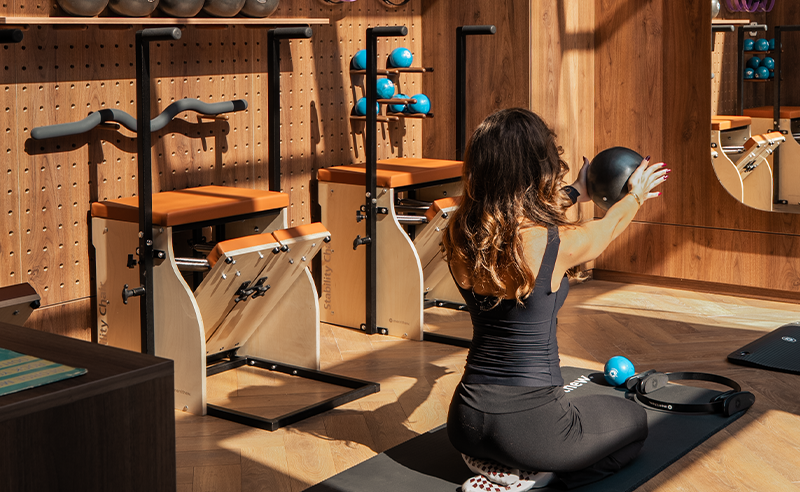
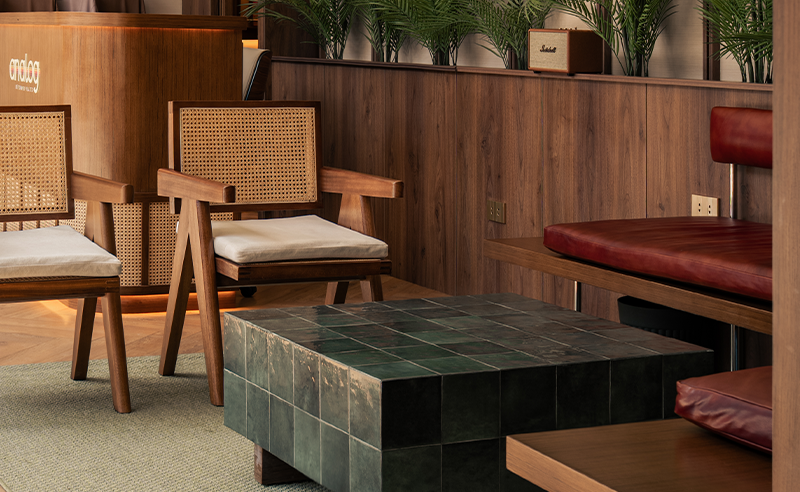 Turning that mood into architecture fell to designer Mahira Ahmed of Anagram. Walnut runs from floor to ceiling, grained and warm, over a herringbone parquet that holds the light like honey. Brass spotlights hang in pairs overhead, and a skylight casts the geometry of its frame across the panelling in slow diagonals, so the room shifts character as the day moves. Mirrors sit in walnut frames with softened corners, the kind you might find at the end of a mid-century corridor, while frosted-glass sconces on brass arms glow like old valve lamps. In their reflections, you can spot framed vintage posters set into lit alcoves, one of them a sepia print of the pyramids.
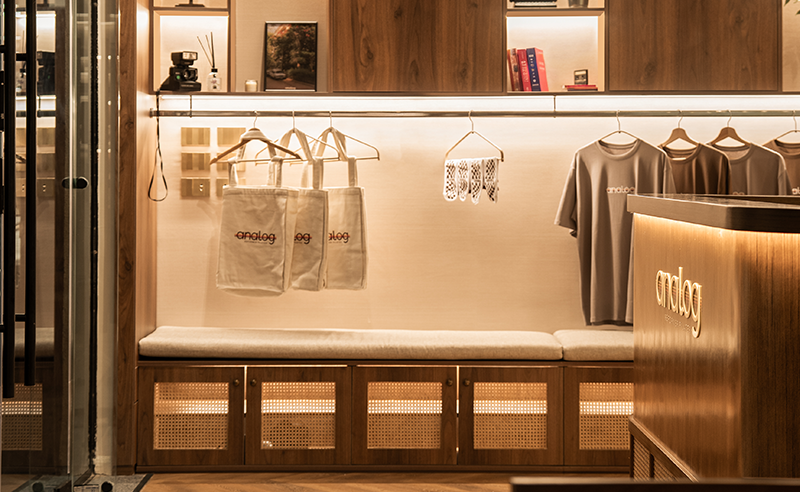
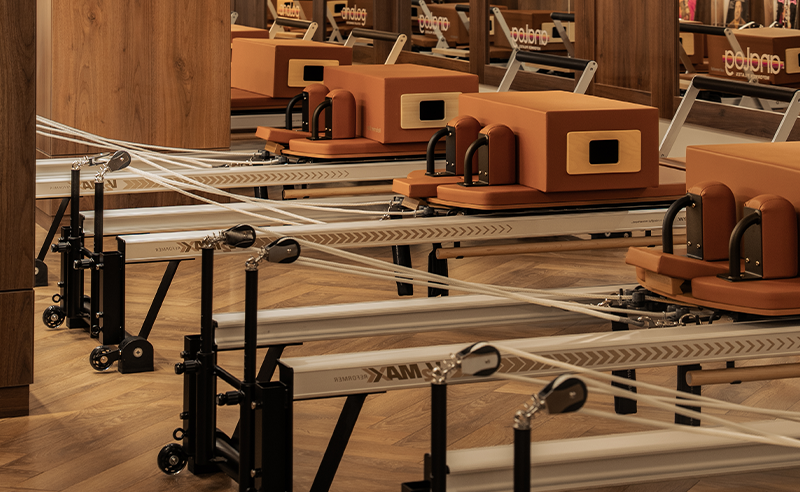 Lined up along the length of the room in burnt-orange leather that deepens to terracotta under the lights, the reformers follow the same logic as the walls around them, built for serious work but arranged and dressed so that nothing about them reads as gym hardware. They are Merrithew’s V2 Max machines, and each box carries a pale wooden panel with a dark cut-out that recalls the face of a vintage radio. Elsewhere the zoning changes pace. One wall is a pegboard of warm timber, hung with rings in black and plum, small blue hand weights arranged like a still life, and wunda chairs with tan seats beneath. A white boombox sits on a shelf as a quiet nod to the studio’s name. Even the changing area is treated as part of the architecture, with rattan-panelled lockers fitted with keypad locks, a brass sconce above a shelf of Aesop, and a tray of rolled towels resting on a slab of deep red marble. Old craft and new technology share the same wall, which is more or less the studio’s philosophy in miniature.
 None of this, Abbas insists, is decoration. “When you design a space where high-performance mechanics meet mid-century modern architecture, it changes how people inhabit the room,” he says. It is an apt idea for a discipline that is architectural at heart. Pilates is, after all, about load and alignment, about tension held in the right places and a spine stacked with intent, and a room built with the same precision gives that work somewhere to land.
 Between the walnut panelling, the amber light and the framed posters on the walls, the studio sounds exactly as old as it looks, because at its centre sits a record player that is fed a fresh delivery of vinyl every month, some of which is available for sale. The team favours the originals for the way they sound, a touch more machined and unmistakably of another era, though newer records are on hand when a class calls for something upbeat. Setting up a record can take five minutes or more, so when an instructor is running late, Bluetooth quietly steps in. Nothing here is policed. The sense of safety, the founders stress, lives in the design itself, with the music as an addition rather than the foundation.
Abbas knows how to build for the long run. In 2016, he helped co-create a gym chain, and Analog, launched in January 2026, is where the lessons in operations and focus from that experience went into something more intentional. The ambition now reaches past a single room. “True success for Analog isn’t measured purely by footprint or how many locations we pin on a map,” he says. “If we can positively impact how an entire community moves through every stage of life, that is the real victory.” If the Arkan studio is any guide, that begins with an old and simple idea: strength is easier to keep up in a place that feels like home.
- Previous Article Egypt’s Sondos Sonbol Wins Wushu Gold at Youth Olympics
- Next Article Hossam Hassan Is Banned From Egyptian TV Appearances
Related Articles

Trending This Month
-

-
 Oct 05, 2026
-
-