
How Salah & Shobeir Reached FIFA's Top Player Power Rankings
Inside FIFA Player Power Rankings: where every action becomes data.

Every football fan has done it. The final whistle blows, you open FotMob, OneFootball, or whatever football addiction you've downloaded onto your phone, and immediately start scrolling through the player ratings. Was Haaland really that good? Did Mbappe deserve Man of the Match? Is Messi outperforming Ronaldo once again? Modern football is obsessed with numbers, and those numbers often fuel the endless debates between fans.
Now, FIFA has entered that conversation with numbers of its own.
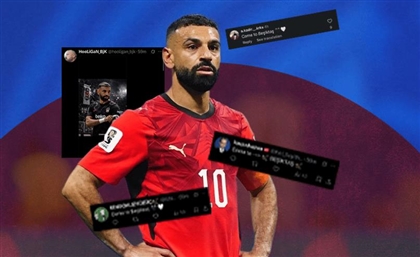
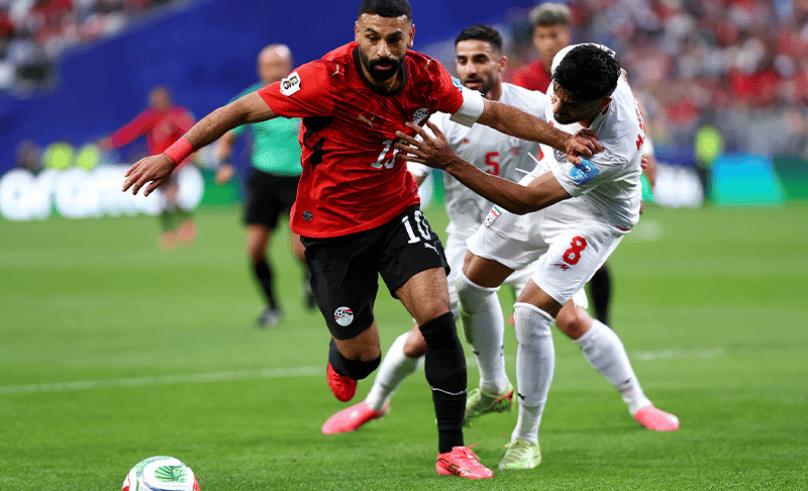
Mohamed Salah ranks fourth in Creativity. Mostafa Shobeir sits sixth in Defending the Goal. Ismael Saibari is tenth in Attacking, while Mohanad Lashin ranks twelfth in Defending after the group stage.
These aren't social media opinions or fan-generated ratings. They're FIFA's official Player Power Rankings. But what exactly do these rankings measure, and how are they calculated?
-2fd667df-f33a-44c6-8fee-f23ade927ff2.png)
The FIFA Player Power Rankings, powered by Aramco, aim to quantify every aspect of a player's performance using one of the most detailed data collection systems in football. Combining FIFA's exclusive performance data with advanced software and analytical models, the rankings identify each player's strongest attributes through thousands of individual actions recorded throughout every match.
Every player on the pitch is monitored by a team of analysts who track virtually every movement. Whether a player is making a decisive run, recycling possession with a simple pass, or merely offering themselves as an option without ever receiving the ball, every decision is recorded and analysed. Even the smallest off-the-ball movements contribute to a player's overall evaluation.
Each category is scored out of 10 on a match-by-match basis. As the tournament progresses, those scores are continually updated, recalculated, and combined, meaning the rankings evolve after every game.
The Player Power Rankings were developed under the guidance of none other than Arsène Wenger, the legendary Arsenal manager and current FIFA Chief of Global Football Development. The rankings are one of several projects led by Wenger during his time at FIFA, alongside his proposed changes to the offside law, which are currently being tested in the Canadian Premier League.
These rankings aren't built on subjective opinions or popularity. They are the product of exhaustive analysis, examining every minute of every match throughout the tournament to produce a data-driven picture of each player's performances.
Because goalkeepers perform a fundamentally different role from outfield players, FIFA evaluates the two groups separately.
Outfield Players
All outfield players are assessed using the same framework, resulting in three primary rankings: Attacking, Creativity, and Defending. These categories allow FIFA to compare every type of player, from centre-forwards to centre-backs, under a consistent analytical model.
Attacking
-bbacf2be-4dde-4406-9504-b6963e820609.png)
Attacking is about far more than goals and assists.
The category measures how dangerous a player is throughout an attacking phase, including movement, decision-making, positioning, involvement in build-up play, and overall attacking influence. Rather than rewarding only the final touch, it captures the complete attacking contribution.
At the end of the group stage on June 27th, Moroccan midfielder Ismael Saibari ranked tenth among all players in the Attacking category.
Saibari has already etched his name into Moroccan football history with his stunning goal against Brazil in their World Cup opener, and the rankings reflect what fans have witnessed on the pitch. With a move to Bayern Munich looming, the young midfielder is already announcing himself on football's biggest stage.
Creativity
Creativity may be the most fascinating category of the three.
Rather than simply counting assists, FIFA attempts to measure the countless decisions that create attacking opportunities. Progressive passing, positioning, movement between the lines, build-up play, and even offering to receive possession without actually touching the ball are all taken into account.
Yes, FIFA even measures the moments when a player creates an option for a teammate but never receives the pass. It's an extraordinary level of detail.
Unsurprisingly, Mohamed Salah features among the tournament's elite, ranking fourth in Creativity after the group stage. Anyone who has watched Egypt throughout the tournament hardly needs a data model to appreciate Salah's influence throughout the tournament. Across the opening three matches, he has looked like the complete version of himself in an Egypt shirt, dictating attacks, creating chances, and carrying his side with the quality that has defined his career.
Defending
-f8b45f48-32b9-4137-aafc-21eed8cd9c5e.png)
Defending receives the same level of microscopic analysis.
Rather than focusing solely on tackles and interceptions, FIFA examines pressing intensity, positioning, defensive duels, recoveries, and countless off-the-ball actions that often go unnoticed during a match.
Defenders rarely receive the same spotlight as attackers, but these rankings help showcase the discipline and consistency required to excel without dominating the highlight reels.
Egypt's Mohanad Lashin ranked twelfth in Defending following the end of the group stage.
His performances may not have generated widespread headlines, but the data highlights the consistency he displayed throughout Egypt's demanding Group G campaign.
Goalkeepers
-7d472449-a82d-4db7-bfb4-5479f5a2306b.png)
Goalkeepers are evaluated using a separate framework designed specifically around their unique responsibilities.
Rather than Attacking, Creativity, and Defending, they are assessed in two categories: Defending the Goal and Ball in Possession.
Defending the Goal
According to FIFA, this category identifies "goalkeepers capable of being decisive when defending their goal, with a strong presence and authority to dominate their area."
It evaluates shot-stopping, decision-making, command of the penalty area, penalty saves, and overall effectiveness when protecting the goal.
-d3f1bf98-06b0-4f77-a868-b9e097f0f620.png)
Among Arab players, Egypt's Mostafa Shobeir has emerged as one of the tournament's standout goalkeepers, ranking sixth in Defending the Goal after the group stage.
The ranking mirrors what fans have already witnessed. Shobeir announced himself with an outstanding performance against Belgium before producing another memorable display against Iran, highlighted by a superb penalty save.
Ball in Possession
Modern goalkeepers are expected to do much more than stop shots.
This category measures how effectively goalkeepers contribute when their team has possession, evaluating passing, receiving under pressure, initiating attacks, breaking opposition lines, and even their movement to provide passing options for teammates.
Together, these two categories paint a far more complete picture of a goalkeeper's influence than traditional statistics alone.
Each of the five ranking categories is evaluated through an exceptionally detailed analytical process. The tables below outline the criteria used in each category and highlight the key metrics FIFA's data analysts use to assess every player's performance.
-6f7298b3-8fb5-4c45-8a05-614160b4bb29.png) Will these rankings settle every football debate? Probably not. Football has always been as much about opinions as it is about numbers. But they do give fans one more layer to appreciate the game and one more statistic to argue over after the final whistle.
Will these rankings settle every football debate? Probably not. Football has always been as much about opinions as it is about numbers. But they do give fans one more layer to appreciate the game and one more statistic to argue over after the final whistle.
- Previous Article Mapping How Far Arab Teams Travelled During the World Cup Group Stage
- Next Article The Clubs Driving the MENA Region’s Padel Obsession