
How LIV Golf’s Uncertain Financial Future Shakes Up the Game
The Saudi-backed league is losing its foundational monetary backing at the end of the 2026 season.

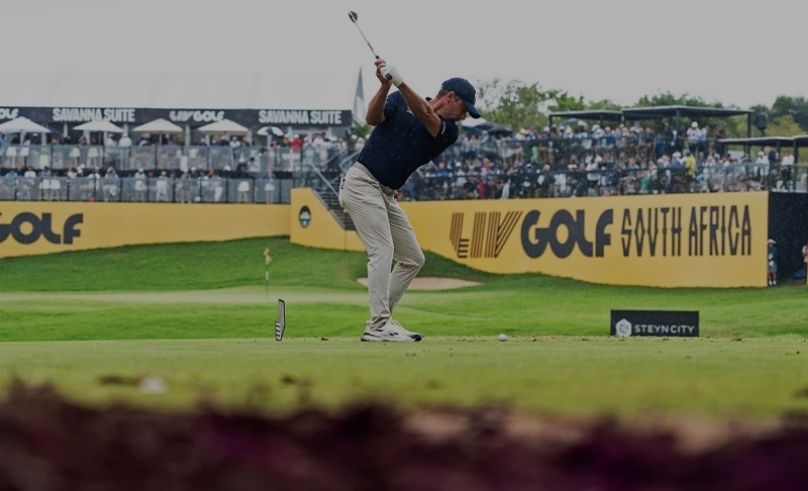
Saudi Arabia’s Public Investment Fund (PIF) is set to withdraw funding from LIV Golf at the end of the 2026 season, marking a major turning point for a league that entered the sport with ambitions of reshaping professional golf.
Launched in 2022 with unprecedented initial financial backing of $2 billion, LIV quickly became one of the most disruptive forces the game had seen. In just four years, however, the project that attracted more than $5 billion in investment now faces an uncertain future after its backers announced their funding withdrawal.
-fa52664b-0ea4-4b27-9517-30a6345cce4f.jpg) From the outset, LIV positioned itself as a direct challenger to the PGA Tour, long regarded as the central pillar of professional golf. Its model broke from the traditions of the sport. For example, the PGA Tour operates on a merit-based system where players earn their place through performance and ranking points, LIV offered guaranteed contracts and large signing bonuses, recruiting established stars directly rather than relying on qualification pathways.
This immediately divided the sport. Some players stayed loyal to the PGA Tour, citing tradition and competitive integrity. Figures such as Tiger Woods and Rory McIlroy became vocal critics of the breakaway league, with Woods reportedly turning down a nine-figure offer to join. Others were drawn by LIV’s financial security. Major winners including Dustin Johnson, Cameron Smith, Bryson DeChambeau, Brooks Koepka and Jon Rahm became key figures in LIV’s roster, giving the league instant global attention but also raising questions about whether it was built on long-term sustainability or short-term star power.
From the outset, LIV positioned itself as a direct challenger to the PGA Tour, long regarded as the central pillar of professional golf. Its model broke from the traditions of the sport. For example, the PGA Tour operates on a merit-based system where players earn their place through performance and ranking points, LIV offered guaranteed contracts and large signing bonuses, recruiting established stars directly rather than relying on qualification pathways.
This immediately divided the sport. Some players stayed loyal to the PGA Tour, citing tradition and competitive integrity. Figures such as Tiger Woods and Rory McIlroy became vocal critics of the breakaway league, with Woods reportedly turning down a nine-figure offer to join. Others were drawn by LIV’s financial security. Major winners including Dustin Johnson, Cameron Smith, Bryson DeChambeau, Brooks Koepka and Jon Rahm became key figures in LIV’s roster, giving the league instant global attention but also raising questions about whether it was built on long-term sustainability or short-term star power.
-8c2974c8-25f5-4d89-9def-4075fd511a7c.jpg) Complicating matters further was LIV’s relationship with the Official World Golf Ranking system. For much of its existence, LIV events did not award ranking points, limiting players’ ability to qualify for major championships. Although recognition was eventually granted in early 2026, the delay reinforced the perception that LIV operated outside golf’s traditional structure.
Beyond recruitment, LIV attempted to reshape how golf is played and consumed. Its tournaments were shortened to 54 holes instead of the traditional 72 and featured smaller fields designed to create a faster-paced product aimed at modern audiences. Despite the innovation, viewing habits didn’t change much and already-established tournaments continued to dominate global attention.
Complicating matters further was LIV’s relationship with the Official World Golf Ranking system. For much of its existence, LIV events did not award ranking points, limiting players’ ability to qualify for major championships. Although recognition was eventually granted in early 2026, the delay reinforced the perception that LIV operated outside golf’s traditional structure.
Beyond recruitment, LIV attempted to reshape how golf is played and consumed. Its tournaments were shortened to 54 holes instead of the traditional 72 and featured smaller fields designed to create a faster-paced product aimed at modern audiences. Despite the innovation, viewing habits didn’t change much and already-established tournaments continued to dominate global attention.
-931fda03-abef-44bd-b21e-1793a0fe849d.jpg) Players also currently face uncertainty over contracts and financial guarantees, while the wider ecosystem adjusts to the loss of its primary backer. Some players are believed to be considering returns to traditional tours, while others remain committed to LIV’s vision. Brooks Koepka’s return to the PGA Tour in 2025 has already shown that reintegration is possible, even after high-profile departures and financial penalties. At the same time, the PGA Tour is exploring mechanisms for allowing former LIV players to return under revised conditions.
The league’s future is now uncertain. LIV is reportedly seeking alternative investment and restructuring its leadership in an attempt to continue operations, appointing Gene Davis and Jon Zinman following the expected resignation of Saudi LIV Chairman Yasir Al-Rumayyan. The league has said that it built a global brand and loyal audience that can still support long-term growth if funding is secured. For now, LIV Golf continues through the remainder of the 2026 season, but its long-term survival is not guaranteed.
Players also currently face uncertainty over contracts and financial guarantees, while the wider ecosystem adjusts to the loss of its primary backer. Some players are believed to be considering returns to traditional tours, while others remain committed to LIV’s vision. Brooks Koepka’s return to the PGA Tour in 2025 has already shown that reintegration is possible, even after high-profile departures and financial penalties. At the same time, the PGA Tour is exploring mechanisms for allowing former LIV players to return under revised conditions.
The league’s future is now uncertain. LIV is reportedly seeking alternative investment and restructuring its leadership in an attempt to continue operations, appointing Gene Davis and Jon Zinman following the expected resignation of Saudi LIV Chairman Yasir Al-Rumayyan. The league has said that it built a global brand and loyal audience that can still support long-term growth if funding is secured. For now, LIV Golf continues through the remainder of the 2026 season, but its long-term survival is not guaranteed.
- Previous Article Badminton World Federation Selects Egypt to Host 2026 World Juniors
- Next Article WATCH: Saudi’s First Pro Boxer Knows How to Take a Jab