
Inside the Enhanced Games With Egypt’s Non-Enhanced Swimmer
As one of only four athletes who remained non-enhanced, Sohib Khaled reflects on competing clean in sport’s most debated new event.

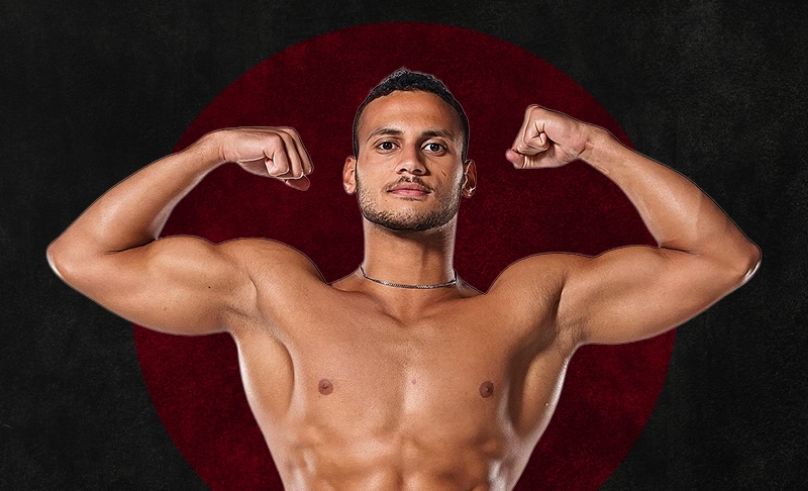
Egyptian swimmer Sohib Khaled found himself at the centre of one of the most controversial sporting experiments in modern history. As the only swimmer representing both Africa and the Middle East at the inaugural Enhanced Games, Khaled entered a competition built around performance enhancement and scientific advancement, yet chose to compete without using any performance-enhancing substances.
While the event sparked global debate over the future of sport, ethics and athletic excellence, Khaled's experience offered a rare perspective from inside the Games as one of only four athletes who remained non-enhanced.
Khaled walked SceneSports through his journey to the Enhanced Games and explained what drew him to one of the most controversial sporting events in recent memory.
-3f0dad81-0b2e-46eb-a0d6-269b637cf3d8.jpg) “I have always been interested in the concept of honest sports,” he said. “In traditional competition, many athletes use performance-enhancing drugs and get away with it, or ‘cheat’ per se. After finishing my final NCAA season with Auburn University, I reached out to them.”
“I have always been interested in the concept of honest sports,” he said. “In traditional competition, many athletes use performance-enhancing drugs and get away with it, or ‘cheat’ per se. After finishing my final NCAA season with Auburn University, I reached out to them.”
Being the youngest athlete in the competition and among the final additions to the roster, Khaled entered the event shortly after graduating from Auburn University. Unlike many competitors who had spent months preparing and attending the Games training camp in Dubai, Khaled had little time to adjust before competing.
-cd8fba93-c405-422e-8987-f828e0821255.jpg) “Preparing for the competition was very short notice since I was the newest signing,” Khaled recalled. “I didn’t get to attend the training camp with the other athletes and competed on just two weeks of training.”
“Preparing for the competition was very short notice since I was the newest signing,” Khaled recalled. “I didn’t get to attend the training camp with the other athletes and competed on just two weeks of training.”
But what exactly were the Enhanced Games?
Created by Australian entrepreneur Aron D’Souza, alongside CEO Maximilian Martin, the Enhanced competition was presented as an effort to push human performance toward its maximum potential through scientific and technological enhancement.
Athletes were permitted to use performance-enhancing substances and advanced equipment under medical supervision. The competition allowed performance-enhancing drugs (PEDs) approved by the U.S. Food and Drug Administration (FDA), though many remained prohibited under regulations set by the World Anti-Doping Agency (WADA). The concept centered on scientific advancement, elite performance, and the redefinition of athletic limits.
That philosophy immediately placed the Games at odds with the International Olympic Committee (IOC), WADA, and many governing bodies across international sport.
Supporters of the project, however, viewed the Games as a step toward greater transparency.
“The Enhanced Games were honest,” Khaled argued. “They introduced a more mainstream approach to a reality that already exists in sports.” His comments reflect a broader debate surrounding the prevalence of underground performance-enhancement communities and the continued development of substances designed to evade detection.
-7bd5482e-71fc-4add-a458-0086c68eb03b.jpg) The inaugural edition of the Games took place on May 24th, 2026, in Las Vegas along the Las Vegas Strip. The private event welcomed approximately 2,500 invited guests and featured four disciplines: swimming, athletics, powerlifting, and strongman competitions. Each was selected for its emphasis on speed, explosiveness, and strength.
The inaugural edition of the Games took place on May 24th, 2026, in Las Vegas along the Las Vegas Strip. The private event welcomed approximately 2,500 invited guests and featured four disciplines: swimming, athletics, powerlifting, and strongman competitions. Each was selected for its emphasis on speed, explosiveness, and strength.
Khaled was joined by 41 other elite athletes, nearly half of whom competed in swimming. The field included several recognisable names, such as former three-time Olympic medallist James Magnussen, Olympic silver medallist Hunter Armstrong, and sprinter Shania Collins.
Athletes were given the choice to either compete clean or use the performance-enhancing substances permitted by the organisers. Khaled was one of only four athletes who reportedly chose to remain non-enhanced, alongside Armstrong and track athletes Fred Kerley and Tristan Evelyn. The quartet was widely viewed as a form of control group throughout the competition.
Khaled noted that he underwent testing by both WADA and the United States Anti-Doping Agency (USADA) before and after the event.
However, all athletes were permitted to use equipment currently banned in mainstream competition. Swimmers competed in polyurethane “super suits,” the controversial high-tech swimsuits prohibited following the backlash surrounding the 2008 and 2009 swimming seasons.
Khaled competed in the men's 50-meter backstroke and 100-meter butterfly, finishing third and fourth respectively.
Having recently concluded his collegiate career at Auburn University, Khaled had previously represented Egypt on multiple occasions, including at the 2022 African Swimming Championships.
-87c2b7e8-3820-4cc9-800e-3536a88c1292.jpg) For many athletes, the financial incentives appeared substantial enough to justify participation. Competitors reportedly received significant base salaries simply for competing, in addition to performance bonuses. Organisers advertised prizes reaching $250,000 for participation and bigger prizes for world record-breaking performances, with additional bonuses attached to select marquee events.
For many athletes, the financial incentives appeared substantial enough to justify participation. Competitors reportedly received significant base salaries simply for competing, in addition to performance bonuses. Organisers advertised prizes reaching $250,000 for participation and bigger prizes for world record-breaking performances, with additional bonuses attached to select marquee events.
While the Enhanced Games have been heavily criticized and remain a taboo topic across much of the sporting world, Khaled described the experience in overwhelmingly positive terms.
“It was the best experience an athlete in any sport could ever ask for,” he said, opening another conversation surrounding the competition, one not directly related to enhancement itself, but rather to athlete care and support.
Critics have frequently raised concerns regarding the long-term health implications associated with enhancement, as medical experts, anti-doping organizations, and sporting authorities do continue to warn about the potential health risks associated with performance-enhancing drugs. In response, the Enhanced Games maintained that all competitors underwent extensive medical testing and monitoring.
Khaled confirmed that level of support from his own experience.
“I got trained by the best coach in the world, with some of the best athletes in the world who were constantly supporting me with advice and guidance,” he said. “My health in every aspect was looked after. Doctors monitored my body, I had access to massage therapists whenever I needed them, healthy food was always available, and I received constant encouragement from the entire team.”
He believes much of the public discussion overlooked those aspects of the event.
-d19bdfac-0d5f-4858-8023-ed0c2071b2a9.jpg) “People only cared about the enhancement side of things,” Khaled said. “They overlooked that, in every single aspect leading up to the Games, no athlete had been given so much support, care, and attention to detail to help us perform at the highest level, enhanced or not. I felt like I belonged to a family the day I arrived in Las Vegas.”
“People only cared about the enhancement side of things,” Khaled said. “They overlooked that, in every single aspect leading up to the Games, no athlete had been given so much support, care, and attention to detail to help us perform at the highest level, enhanced or not. I felt like I belonged to a family the day I arrived in Las Vegas.”
Khaled also shared his observations regarding the effects of enhancement on athletes who chose to use the substances permitted by the competition.
“From what I saw, they were more explosive, more focused, and recovered faster between races,” he explained. “Using performance-enhancing drugs correctly and under professional supervision can improve performance significantly. Some athletes even had existing health issues that they felt were improved through properly managed enhancement programs.”
The results themselves generated further debate.
Only one world record was ultimately broken throughout the competition. The sole record-breaking performance came from Greek swimmer Kristian Gkolomeev, a two-time World Championship silver medallist, who completed the men's 50-meter freestyle in 20.88 seconds. The performance earned him a reported $1 million prize. Gkolomeev had previously swum 20.89 during an enhanced time trial the year before. The results generated divided reactions.
Through the speculation and debate, Khaled hopes the public looks beyond the headlines.
“I hope people realise what the Enhanced Games actually are,” he said. “Contrary to the rumours, it's one of the safest environments for an athlete to be in.”
Looking ahead, Khaled says the experience has influenced his ambitions moving forward.
“My biggest goal after experiencing the Enhanced Games is to train these people again,” he said. “I believe that if I have a full season of training with athletes and coaches like this, I can become one of the fastest swimmers in the world. That's my goal.”
Ultimately, the Enhanced Games pushed broader questions regarding the future of athletic competition, including the role of medical and technological advancement, athlete welfare, and the ethical limits of enhancement in modern sport.